Konstantin Lomashuk
Co-Founder of Lido Finance
Konstantin Lomashuk is a Russian blockchain entrepreneur who co-founded Lido Finance — the largest liquid staking protocol in the world, which has fundamentally changed how Ethereum validators are economically organised and how users participate in Proof of Stake consensus.
In this profile
Konstantin Lomashuk is a blockchain entrepreneur and investor who co-founded Lido Finance alongside Vasiliy Shapovalov, Kasper Rasmussen, Jordan Fish (known online as CobraCoin), and Isidoros Passadis. Lido Finance, launched in December 2020, solved a fundamental problem that had constrained Ethereum's transition to Proof of Stake: the illiquidity of staked ETH. By allowing users to stake any amount of ETH and receive a liquid token (stETH) in return, Lido unlocked the economic participation of Ethereum's Proof of Stake network for users who could not or would not lock their ETH in a traditional validator node.
Prior to co-founding Lido, Lomashuk was involved in building P2P.org, a professional validator infrastructure service that operates nodes for multiple Proof of Stake networks. His experience operating validator infrastructure at scale gave him an understanding of both the technical requirements and the economic incentives of Proof of Stake participation — a background that directly informed Lido's architecture.
The Liquid Staking Problem
Ethereum's transition to Proof of Stake — completed with The Merge in September 2022, though the staking mechanism launched as a separate Beacon Chain in December 2020 — required validators to lock a minimum of 32 ETH as a security deposit. This 32 ETH minimum excluded the majority of ETH holders from direct validation, and even those who could meet the minimum faced a significant economic constraint: staked ETH could not be withdrawn, transferred, or used as collateral elsewhere while it was locked in the validator contract.
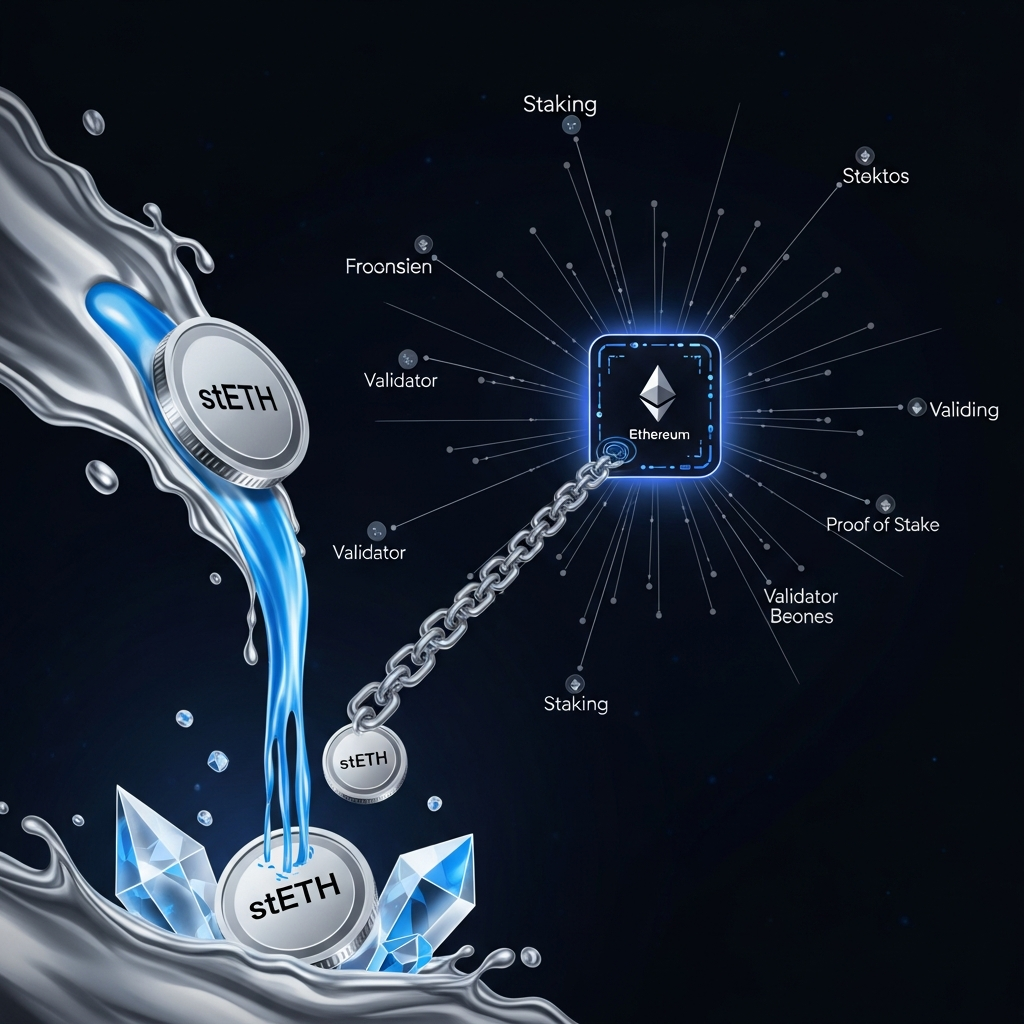
Lido's solution was a liquid staking model: users deposit ETH into the Lido protocol, which pools the deposits and deploys them across a curated set of professional node operators running Ethereum validators. In exchange, depositors receive stETH — an ERC-20 token that represents their staked ETH plus accumulated staking rewards, rebasing daily to reflect accrued yield. Because stETH is a standard transferable token, it can be traded on DEXes, used as collateral on lending protocols, or deployed in yield strategies — effectively making staked ETH liquid for the first time.
The design had immediate market appeal. By removing both the 32 ETH minimum and the liquidity constraint, Lido made Ethereum staking accessible to any holder of any amount of ETH, while simultaneously making staked ETH a composable DeFi asset. stETH became one of the most widely held and traded tokens in the Ethereum ecosystem within months of its launch.
Growth and Market Dominance
Lido's growth was extraordinary. By 2022, Lido had become the single largest staker on the Ethereum network, and by 2023 it controlled approximately 30% of all staked ETH — a concentration that attracted significant scrutiny from Ethereum researchers, core developers, and community members concerned about the centralisation risk to Ethereum's consensus layer.
The concern was substantive: if Lido's node operators collectively represented more than 33% of all staked ETH, a coordinated failure or attack on Lido's infrastructure could theoretically threaten Ethereum's finality guarantees. If they reached 51%, the risk would extend to censorship and double-spending attacks. Ethereum co-founder Vitalik Buterin and other core researchers publicly stated that liquid staking protocols should voluntarily cap their share of staked ETH below 33% to prevent systemic risk.
The Lido DAO — governed by LDO token holders — engaged extensively with these concerns through governance discussions about self-limiting mechanisms, expanded node operator sets, and distributed validator technology (DVT) implementations that would make individual validator operations more resilient to failure. The governance debate around Lido's market share became one of the most substantive discussions in Ethereum's history about the trade-off between decentralised staking access and protocol-level centralisation.
stETH Across DeFi
The DeFi composability of stETH made it the engine of numerous yield strategies across the ecosystem. The largest stETH/ETH pool on Curve Finance — maintained by the Curve Wars incentive mechanism — consistently held billions of dollars in liquidity, making it one of the deepest on-chain markets for any asset pair. Aave, Compound, and MakerDAO all accepted stETH as collateral, allowing holders to borrow stablecoins against their staked ETH while continuing to earn staking rewards.
The 2022 'stETH depeg' event — in which stETH traded at a discount to ETH during the market turmoil following the Terra/Luna collapse and Celsius Network's liquidity crisis — tested Lido's design under stress. Although the discount reached approximately 5-7% at its worst, stETH did not break peg, and when Ethereum enabled staking withdrawals in April 2023, the price of stETH converged back to ETH parity as arbitrageurs could redeem stETH for ETH directly through the protocol.
LDO Governance and the Lido DAO
The LDO governance token was distributed to Lido's founding team, investors, and early contributors, and is used to vote on protocol parameters including node operator selection and weighting, fee structure, oracle selection, and treasury allocations. The Lido DAO has funded extensive development work including DVT (Distributed Validator Technology) integrations that further decentralise the validator operation, and community staking modules that allow solo validators to participate in Lido's infrastructure.
Lomashuk and the Lido founding team have remained engaged with the protocol's development and governance, contributing to the public discourse around liquid staking's role in the Ethereum ecosystem. Lido Finance has become not just a dominant DeFi protocol but a critical piece of Ethereum's economic infrastructure — a position that carries both extraordinary influence and extraordinary responsibility for the health of the network it serves.
Konstantin Lomashuk: Frequently Asked Questions
Who is Konstantin Lomashuk?
Konstantin Lomashuk is a Russian blockchain entrepreneur who co-founded Lido Finance — the largest liquid staking protocol in the world, which has fundamentally changed how Ethereum validators are economically organised and how users participate in Proof of Stake consensus.
What is Konstantin Lomashuk known for?
Co-founding Lido Finance (2020), Pioneering liquid staking on Ethereum, Creating the stETH liquid staking token, Building the largest staked ETH validator network, Co-founding P2P.org validator infrastructure
What is Konstantin Lomashuk's role in DeFi?
Konstantin Lomashuk is Co-Founder of Lido Finance. Konstantin Lomashuk is a blockchain entrepreneur and investor who co-founded Lido Finance alongside Vasiliy Shapovalov, Kasper Rasmussen, Jordan Fish (known online as CobraCoin), and Isidoros Passadis. Lido Finance, launched in December 2020, solved